


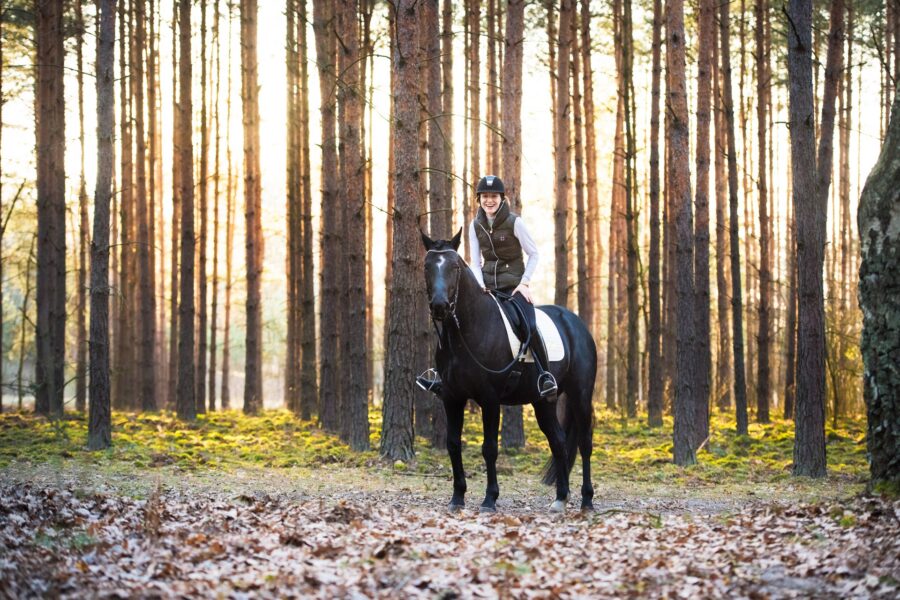
Straightness becomes much easier to understand when we compare muscle-based movement with Tendon-Based Movement. In muscle-based movement, the muscles are the main structures creating the forces that move the horse’s body. This means that any difference between the muscles on the left and right side can be reflected very clearly in the movement. If one
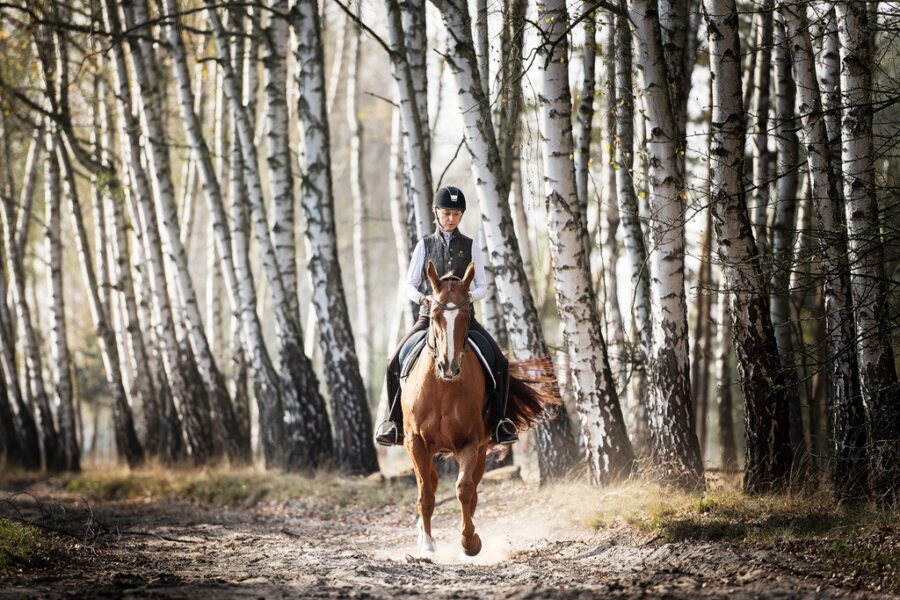
Riding Straight Lines — The Big Egg: Half-Circle to Straight Line When your horse is already warmed up in walk, trot, and canter, and both sides of his body are equally lengthened and elasticized, we can begin to ride on straight lines. This does not mean that we suddenly leave all the circle work behind
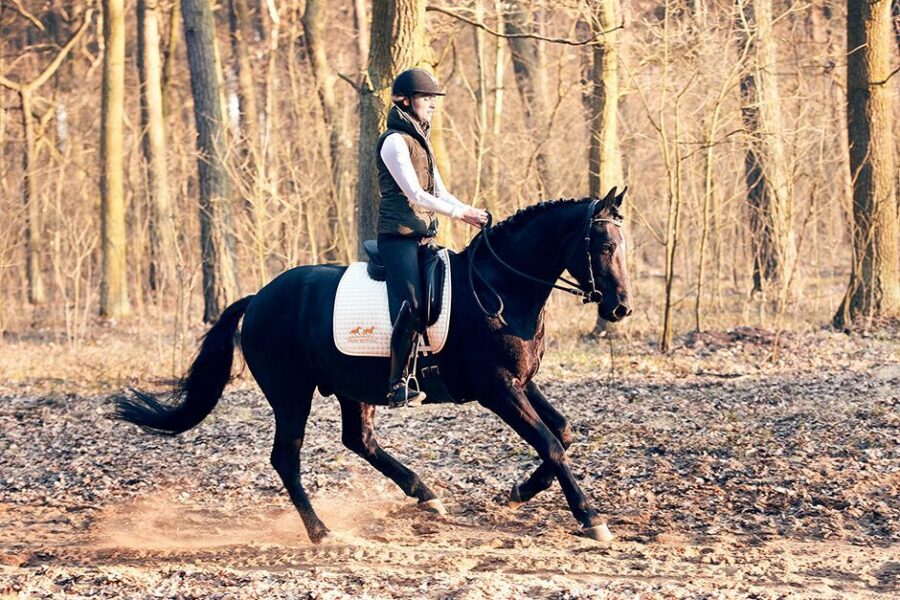
Canter Practice for Straightness, Length, and Connected Relaxation In this part of the Anna’s Riding Method Course we are going to practice the same straightness work in canter. Canter is functionally asymmetrical gait, so we are not looking for the same diagonal symmetry that we could feel in trot. In trot, we can clearly feel
As riders begin working on straightness, it is very easy to fall into ideas that seem logical on the surface, but actually make the horse more tense, more resistant, and more crooked. This happens because straightness is often misunderstood as a problem of positioning. Riders try to keep the horse “between the reins” and “between
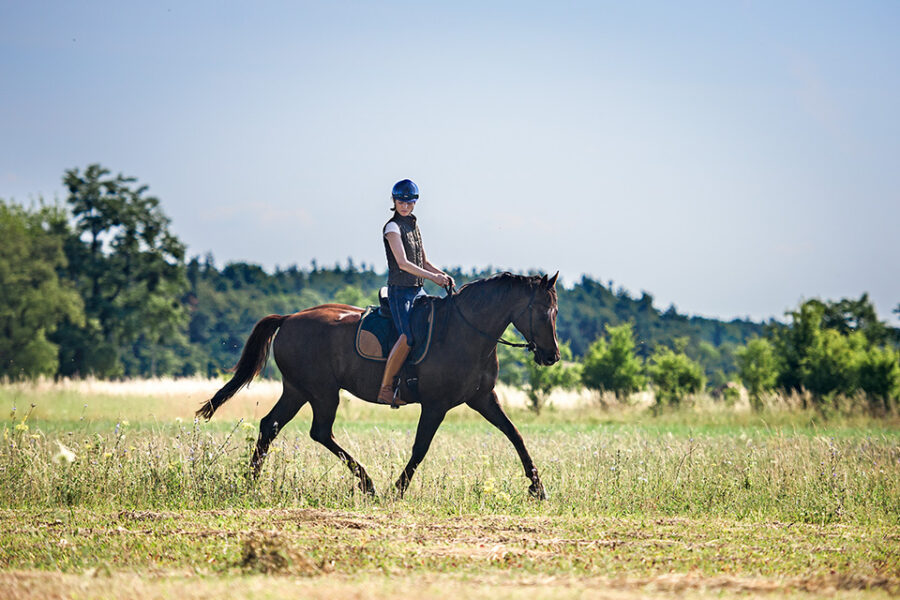
In this module, we begin practicing the same body-to-body connection that we established in walk, but now in trot. The goal is not simply to make the horse trot forward, nor to place the head in a certain position. The goal is to teach the horse how to move in trot with a long neck,

Once the horse is fully warmed up and the horse’s mouth is connected with the rider’s back, we can begin preparing both sides of the horse’s body to relax evenly. This phase of the training is done in walk before moving into trot. Its purpose is to check whether the horse can follow the rider’s

Now that we understand the biomechanics of straightness and the role of relaxation, we can begin applying these principles in practice: The exercises in this module are deliberately (and deceptively) simple. Their purpose is not to make the horse perform complicated movements. Their purpose is to help the rider gradually teach the horse to relax
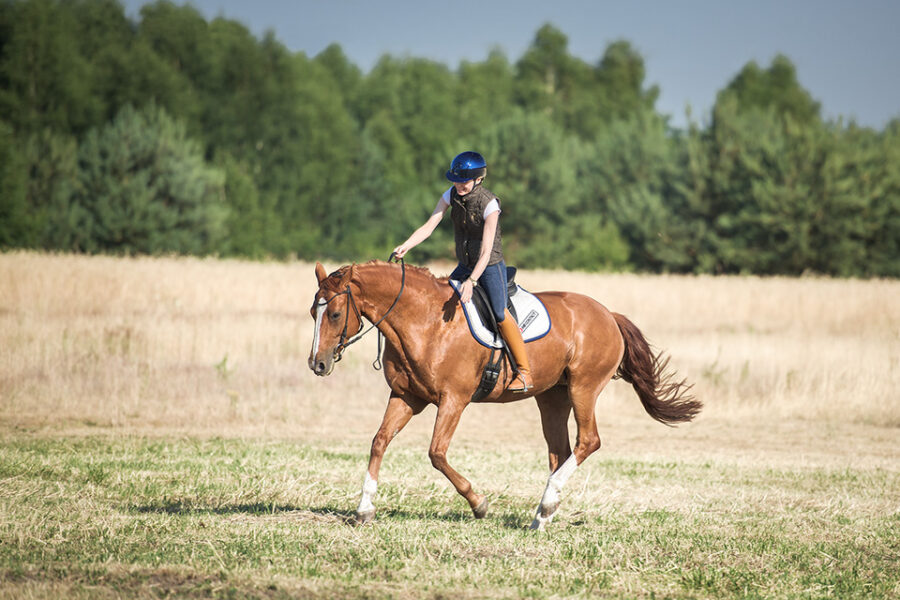
One of the biggest differences between Anna’s Riding Method and many traditional approaches is that we do not try to straighten the horse by constantly correcting the horse. Many riders spend their entire ride correcting the position of the horse’s shoulders, moving, blocking, or positioning the hindquarters with the legs, adjusting the flexion, changing the

To understand straightness, we first need to understand what we are actually trying to achieve when we straighten a horse. Many riders believe that straightness means making both sides of the horse equal. They spend years trying to strengthen the weaker side, stretch the stiffer side, and create perfect symmetry throughout the horse’s body. At
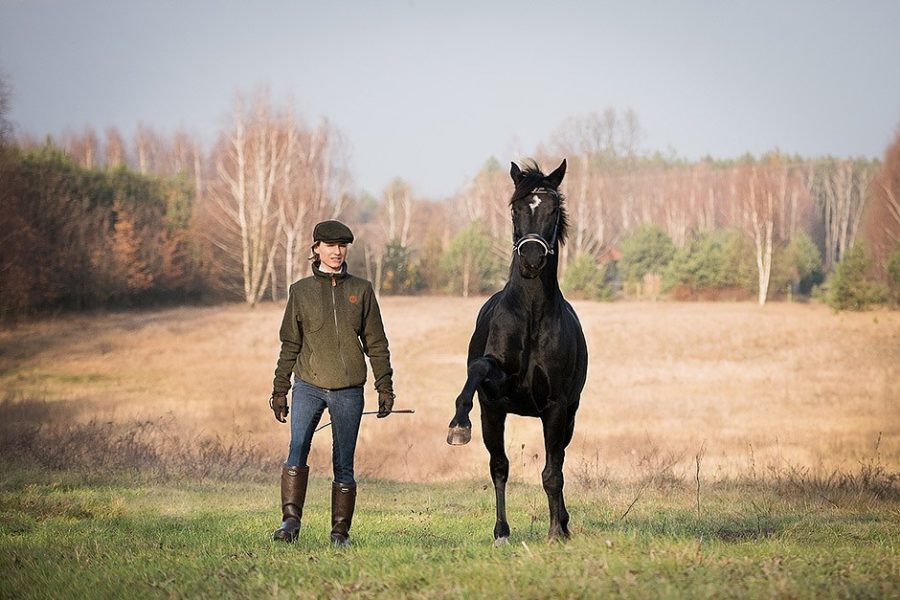
When I teach riders and ride horses that come to me in training I see over and over again that straightness is one of the most misunderstood concepts in horse riding. Many riders assume that a horse becomes straight when the rider continuously corrects the position of the horse: riders focus on the position of