


Starting 1st of March
OneHorseLifePLUS
12 months to build tendon-based movement with biomechanics and conscious relaxation
Most training problems look like “movement problems,” but they’re often regulation problems first. If the horse can’t down-regulate, you can add technique forever and still end up with tension, bracing, and power that feels heavy.
OneHorseLife+ is a 12-month program that stays very clear on one thing: *tendon-based movement. Not as a buzzword — as the actual elastic system that lets a horse store and release energy efficiently. And because that system only works when the body is organised and the nervous system is stable, everything in OHL+ is built on **biomechanics and conscious relaxation*.
The year is structured. Each month you get a specific focus and we meet live as a group monthly, so people don’t drift into “trying random things” and calling it training.
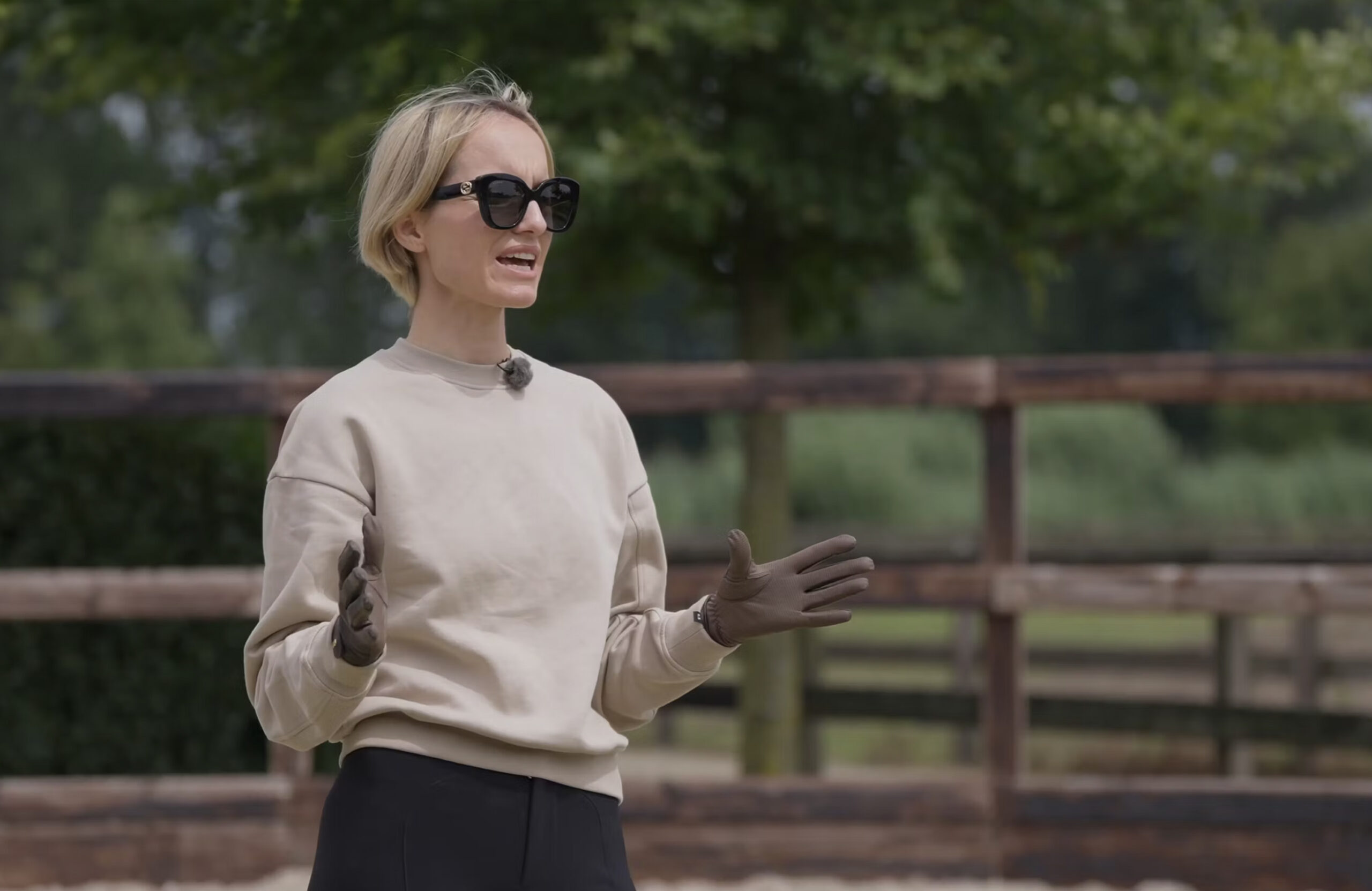
1: Theory & understanding
We start simple and build. You’ll learn enough physics and biomechanics to make sense of what you feel: position, acceleration, forces, energy, circles, gravity, elastic forces and how tendons produce power. Then we go into the horse as a springy body — spine, pelvis, neck, hind legs — and later force transfer (diagonals vs direct lines), rhythm, and the “mechanical brain.”
The point isn’t to become academic. The point is that once you understand force transfer, you stop “fixing” symptoms and start changing the cause.


2: Ground work
This is where your approach is different from most training.
We don’t use reinforcement and cues to “get relaxation.” That easily turns into pressure-response-release, and pressure changes the nervous system state. *Relaxation is taught through suggestions.* The horse learns to recognise a pathway to release and choose it.
That’s also why the “distractions month” matters: we don’t fight distractions. We use them as moments to practice regulation. The goal is not control — it’s a horse that can stay organised and soften when the environment changes.
Over the year, the groundwork progresses through:
relaxation signs and relaxation techniques
suggestions → conscious relaxation
stopping and starting without tension
transitions (as elastic training, not as obedience)
walk/trot development toward canter
smaller circles
canter on smaller circles
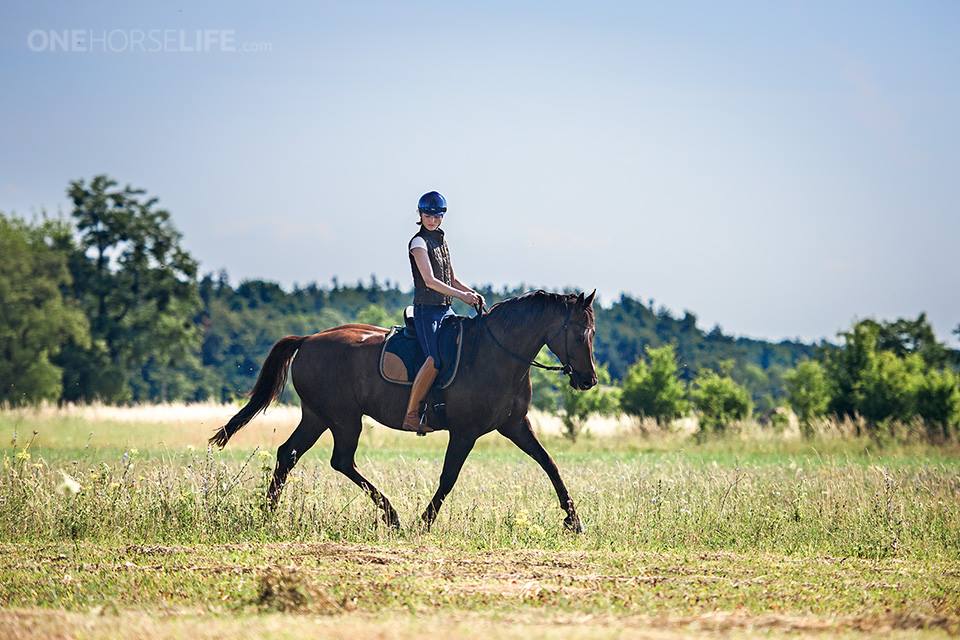
3: Riding
Riding follows the same logic: organise the body, keep the system calm, then build elastic power.
We start with hands, seat and stopping (proper aids and safety). Then energy in circles, lengthening/acceleration, and transitions. After that come frame changes, corners, extended walk/trot, canter development, lateral work, and finally diagonal energy transfer (shoulder-in, travers) and tendon activation in corners.
It’s a progression. People often try the later pieces without the earlier ones — this course prevents that.
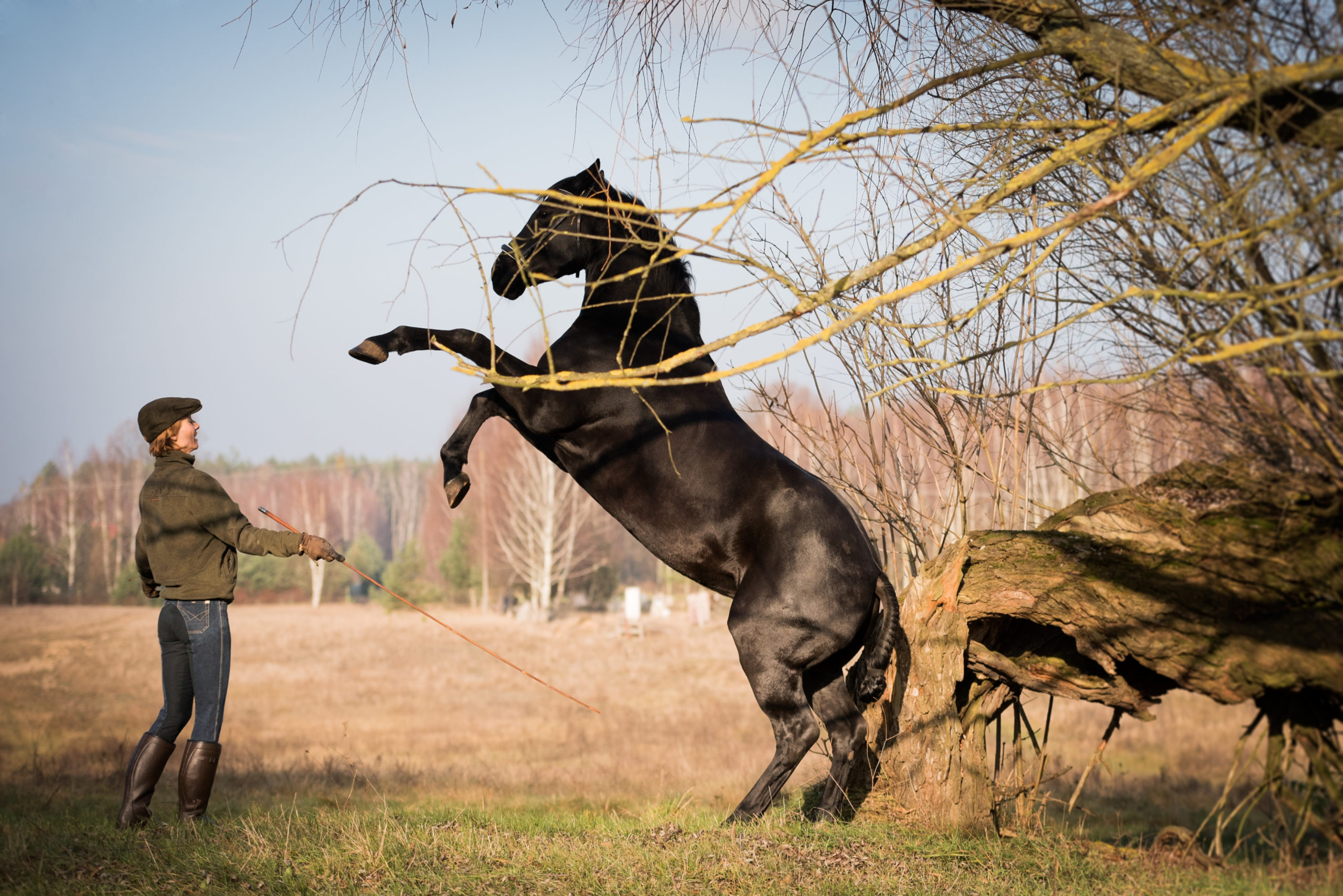
4: Transformations
You’ll see the system applied to real horses, not “perfect demo horses.” Ages 2 to 20, in dressage and jumping.
That matters because it shows what changes are structural and what changes are just temporary “good days”. You’ll see improvements in posture, back mobility, diagonal coordination, canter quality, rhythm, and overall expression — across different bodies and different histories.
OneHorseLife+
12 months to build tendon-based movement with biomechanics and conscious relaxation
Who is This For?
This is for riders who want to improve their own horse — especially in dressage or jumping — and who are done with tension-based training.
Why tendon-based movement is relevant, in simple facts:
DRESSAGE
Diagonal coordination is what gives quality in trot Collection depends on efficient energy recycling, not muscular effort.
Frame changes and lateral work require clean force transfer through the body.
JUMPING
Take-off power comes from elastic loading of the hind endEfficient force transfer supports bascule and reduces wasted effort.
Better distribution of forces matters for longevity and soundness.
EVENTING
Improves quality of dressage movements through natural self-carriage and elasticity Enhances jumping power through true elastic energy recycling Develops efficient cross-country stamina without overloading the muscles Reduces fatigue by shifting from muscle-dominant to tendon-based biomechanics Builds long-term structural resilience for high-performance sport
Dedicated Horse Owner
Supports long-term soundness and tendon health Stimulates collagen production through rhythmic, correct loading Builds strong, healthy back muscles without tension Improves posture and natural self-carriage under the rider Reduces risk of tendon injuries caused by sudden overload Increases your horse’s comfort, willingness and joy in movement
| Month | Biomechanics & Theory | Ground Work | Riding |
|---|---|---|---|
| 1 | Intro to Tendon Based Movement | Relaxation technique & relaxation signs | Basic riding – hands & turning |
| 2 | Relaxation & Tendon Based Movement | Reinforcement, suggestions & teaching relaxation | Basic riding – seat |
| 3 | Intro to Biomechanics 1 – goals, scopes & questions | Stopping | Stopping – correct aids & safety (incl. OPP principles) |
| 4 | Intro to Biomechanics 2 – position, movement & acceleration | Distractions | Building energy – turning & circles (OPP) |
| 5 | Intro to Biomechanics 3 – forces, energy, circles & gravitation | Starting | Lengthening & accelerating (OPP) |
| 6 | Intro to Biomechanics 4 – elastic forces & tendon power | Transitions | Transitions (OPP) |
| 7 | Horse like a springy body 1 – spine, pelvis & neck | Walking with changing movement | Changing frames – introduction (OPP) |
| 8 | Horse like a springy body 2 – hind legs | Trot with hanging neck & acceleration | Going through corners & building energy |
| 9 | Horse like a springy body 3 – waving back | Improving trot – pelvis relaxation, prepare for canter | Extended walk & trot |
| 10 | Horse like a springy body 4 – transfer of forces, diagonals & direct | Canter with acceleration in good position | Canter |
| 11 | Horse as intelligent body & healing movement 1 – mechanical brain | Smaller circles | Lateral movements + Better diagonal energy transfer (circles, shoulder-in & travers) |
| 12 | Horse as intelligent body & healing movement 2 – rhythm | Canter on smaller circles | Changing frames in corners – activate tendons |
Tendon Based Movement – 12 Month Integrated Curriculum (Refined)
Month 1
Biomechanics & Theory
Intro to Tendon Based Movement
Ground Work
Relaxation technique & relaxation signs
Riding
Basic riding – hands & turning
Month 2
Biomechanics & Theory
Relaxation & Tendon Based Movement
Ground Work
Reinforcement, suggestions & teaching relaxation
Riding
Basic riding – seat
Month 3
Biomechanics & Theory
Intro to Biomechanics 1 – goals, scopes & questions
Ground Work
Stopping
Riding
Stopping – correct aids & safety (incl. OPP principles)
Month 4
Biomechanics & Theory
Intro to Biomechanics 2 – position, movement & acceleration
Ground Work
Distractions
Riding
Building energy – turning & circles (OPP)
Month 5
Biomechanics & Theory
Intro to Biomechanics 3 – forces, energy, circles & gravitation
Ground Work
Starting
Riding
Lengthening & accelerating (OPP)
Month 6
Biomechanics & Theory
Intro to Biomechanics 4 – elastic forces & tendon power
Ground Work
Transitions
Riding
Transitions (OPP)
Month 7
Biomechanics & Theory
Horse like a springy body 1 – spine, pelvis & neck
Ground Work
Walking with changing movement
Riding
Changing frames – introduction (OPP)
Month 8
Biomechanics & Theory
Horse like a springy body 2 – hind legs
Ground Work
Trot with hanging neck & acceleration
Riding
Going through corners & building energy
Month 9
Biomechanics & Theory
Horse like a springy body 3 – waving back
Ground Work
Improving trot – pelvis relaxation, prepare for canter
Riding
Extended walk & trot
Month 10
Biomechanics & Theory
Horse like a springy body 4 – transfer of forces, diagonals & direct
Ground Work
Canter with acceleration in good position
Riding
Canter
Month 11
Biomechanics & Theory
Horse as intelligent body & healing movement 1 – mechanical brain
Ground Work
Smaller circles
Riding
Lateral movements + Better diagonal energy transfer (circles, shoulder-in & travers)
Month 12
Biomechanics & Theory
Horse as intelligent body & healing movement 2 – rhythm
Ground Work
Canter on smaller circles
Riding
Changing frames in corners – activate tendons
Starting 1st of March
OneHorseLifePLUS
12 months to build tendon-based movement with biomechanics and conscious relaxation
OneHorseLife+
Subscribe to start watching
12 months to build tendon-based movement with biomechanics and conscious relaxation
subscribe to our newsletters
OneHorseLife
Professionals
PRO Certification
Find a Certified Teacher
Teacher Directory
Apply for Certification
© 2026 OneHorseLife B.V. All methods, training materials, and certification systems protected.