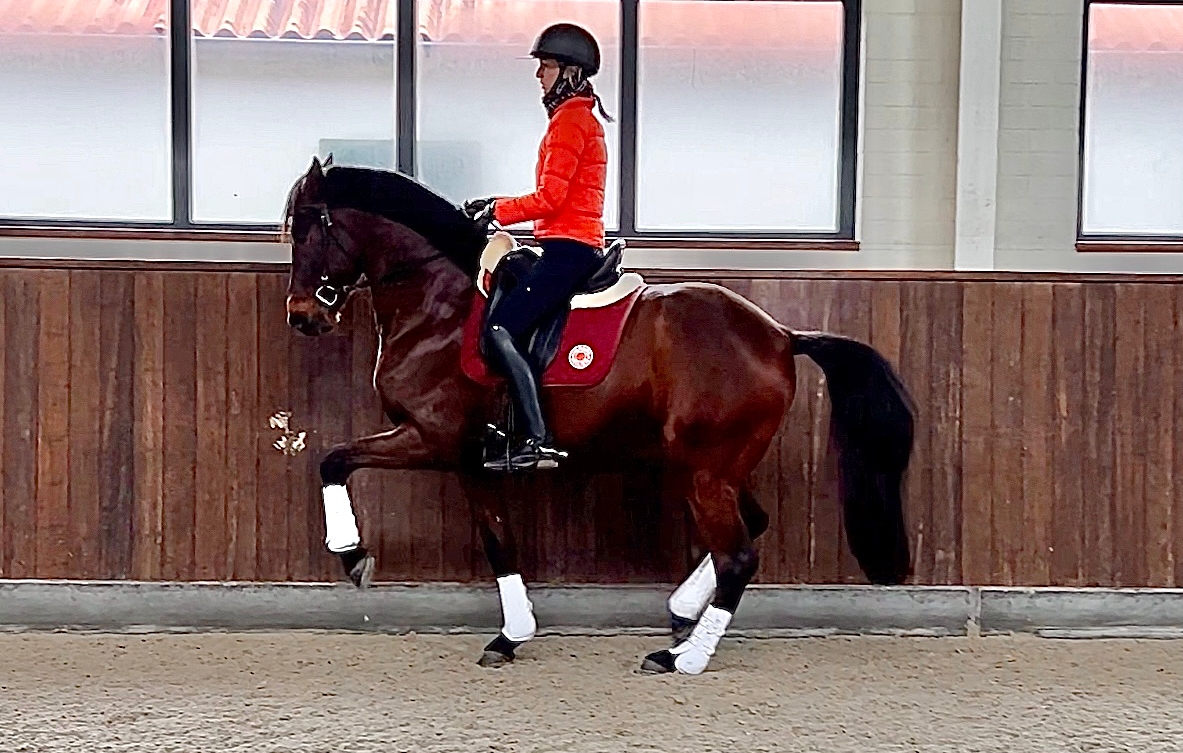
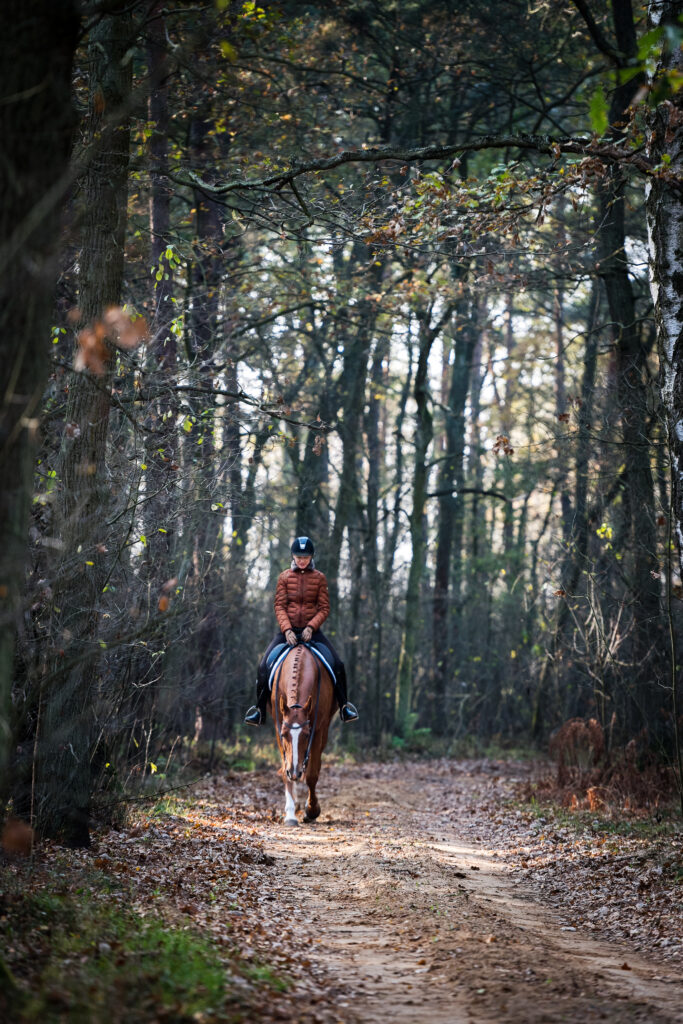
Anna’s Riding Method

The OneHorseLife riding system where horse and rider become one moving organism

Anna’s Riding Method is not another collection of riding cues.

It is not another system of stronger aids, technical tricks, biomechanical gimmicks, or complicated corrections.

It is the first uniquely developed OneHorseLife riding system that brings together the full power of:

Conscious Relaxation,Residual Tensions Release,and Tendon-Based Movement

into one living, working riding method.

This method was created to support both the rider and the horse in developing a completely new quality of riding — a cue-less riding experience where the horse does not respond to a list of artificial signals, but naturally and biologically understands the rider’s body.

The rider does not force.
The rider does not micromanage.
The rider does not constantly correct.
The rider does not make the horse smaller.

Instead, the rider learns how to become part of the horse’s movement system.

Horse and human begin to unite into one functioning organism — two living systems moving together, responding to one another in real time, with precision, softness, and deep physical understanding.

This is the heart of Anna’s Riding Method.

A new way to understand riding

Most riding systems teach the horse to respond to cues.

A leg cue.
A rein cue.
A seat cue.
A half-halt.
A transition aid.
A bending aid.
A collecting aid.
A correcting aid.

The rider learns more and more signals.

The horse learns to recognize them.

And eventually riding becomes a language of instructions.

But OneHorseLife asks a different question:

What if the deepest riding connection is not based on cues?

What if the horse can respond to the rider not because he has been trained to decode a signal, but because the rider’s body makes sense to the horse’s body?

What if riding can become a real-time biomechanical conversation?

What if the rider and horse can move as one system?

Anna’s Riding Method was created from this vision.

It teaches the rider how to communicate through physics, biomechanics, relaxation, body organization, contact, and movement — in a way the horse can perceive naturally.

This is why we call it a cue-less riding system.

Not because the rider does nothing.

But because the rider stops giving artificial instructions and begins to become understandable through the body.

The crown of the OneHorseLife groundwork journey

Anna’s Riding Method is the crown of the OneHorseLife groundwork programs.

Everything the horse and human develop from the ground is meant to lead somewhere.

Conscious Relaxation teaches the horse to release unnecessary tension.

RTRT teaches the horse to release deep residual tensions through precise contact.

Tendon-Based Movement awakens the horse’s elastic movement system.

But for many people, the question remains:

How do we bring all of this into riding?

How do we ride without destroying the relaxation developed from the ground?

How do we sit on the horse without blocking the back?

How do we use contact without creating fear, brace, or heaviness?

How do we ask for movement without losing softness?

How do we develop performance without losing the horse?

Anna’s Riding Method answers this question.

It shows riders where their OneHorseLife groundwork journey was heading all along.

It allows the connection created from the ground to enter the ridden experience — without compromising relaxation, suppleness, contact, trust, or Tendon-Based Movement.

Why normal riding often breaks the horse’s movement

Many horses become better from the ground.

They relax.
They open.
They become softer.
They begin to move with more freedom.
They discover new body awareness.
They begin to access more elastic movement.

But then the rider gets on.

And suddenly the old problems return.

The back tightens.
The contact becomes heavy.
The horse becomes small.
The canter loses balance.
The body becomes crooked.
The movement loses expression.
The horse begins to protect himself again.

This does not always happen because the rider is harsh.

Very often, it happens because traditional riding technique unintentionally creates tension.

The hands are too active.
The seat is unstable or blocking.
The pelvis does not follow the horse.
The rider’s body gives contradictory information.
The horse receives too many signals.
The rider corrects instead of joining the movement.

Then the horse has to defend the body from the rider.

Anna’s Riding Method was created to solve this problem.

It teaches the rider how to ride in a way that supports what OneHorseLife already develops in the horse.

The rider becomes a continuation of the horse’s relaxation, not an interruption of it.


The three OneHorseLife principles inside Anna’s Riding Method

1. Conscious Relaxation under saddle

In Anna’s Riding Method, relaxation is not something that happens before riding or after riding.

Relaxation must be present inside riding.

Inside contact.
Inside transitions.
Inside canter.
Inside circles.
Inside corners.
Inside collection.
Inside extensions.
Inside lateral work.
Inside the moment where the horse would normally tense.

The rider learns how to stay relaxed, stable, and clear enough that the horse does not need to protect himself from the human body.

This allows the horse to remain mentally and physically present under saddle.

The horse does not switch off.

The horse becomes more available.

2. Residual Tensions Release in ridden contact

Contact is one of the most important parts of Anna’s Riding Method.

But contact is not understood as control.

The hands are not used to pull, shape, fix, or force the horse into a frame.

The hands become passive, precise, and conscious.

The contact becomes a bridge between the rider’s body and the horse’s body.

This is where Anna’s Riding Method connects with RTRT.

The rider learns how contact can support release instead of creating resistance.

The horse can begin to trust the hand because the hand no longer attacks, blocks, or manipulates the mouth.

The contact becomes a place where the horse can soften, release, and reorganize.

3. Tendon-Based Movement in riding

Tendon-Based Movement cannot truly develop under a rider who blocks the horse’s elastic system.

If the rider sits against the back, pulls on the front, stiffens the pelvis, or creates tension in the contact, the horse cannot fully access elastic movement.

Anna’s Riding Method teaches the rider how to support the horse’s elastic body.

The rider learns how to stay with the movement, guide the movement, and organize the movement without destroying its natural spring.

This is how riding can become more efficient, more powerful, and more deeply connected.

The horse does not move bigger because the rider forces bigger movement.

The horse moves bigger because the rider stops making the horse small.

1. Conscious Relaxation under saddle

In Anna’s Riding Method, relaxation is not something that happens before riding or after riding.

Relaxation must be present inside riding.

Inside contact.
Inside transitions.
Inside canter.
Inside circles.
Inside corners.
Inside collection.
Inside extensions.
Inside lateral work.
Inside the moment where the horse would normally tense.

The rider learns how to stay relaxed, stable, and clear enough that the horse does not need to protect himself from the human body.

This allows the horse to remain mentally and physically present under saddle.

The horse does not switch off.

The horse becomes more available.

2. Residual Tensions Release in ridden contact

Contact is one of the most important parts of Anna’s Riding Method.

But contact is not understood as control.

The hands are not used to pull, shape, fix, or force the horse into a frame.

The hands become passive, precise, and conscious.

The contact becomes a bridge between the rider’s body and the horse’s body.

This is where Anna’s Riding Method connects with RTRT.

The rider learns how contact can support release instead of creating resistance.

The horse can begin to trust the hand because the hand no longer attacks, blocks, or manipulates the mouth.

The contact becomes a place where the horse can soften, release, and reorganize.

3. Tendon-Based Movement in riding

Tendon-Based Movement cannot truly develop under a rider who blocks the horse’s elastic system.

If the rider sits against the back, pulls on the front, stiffens the pelvis, or creates tension in the contact, the horse cannot fully access elastic movement.

Anna’s Riding Method teaches the rider how to support the horse’s elastic body.

The rider learns how to stay with the movement, guide the movement, and organize the movement without destroying its natural spring.

This is how riding can become more efficient, more powerful, and more deeply connected.

The horse does not move bigger because the rider forces bigger movement.

The horse moves bigger because the rider stops making the horse small.

Cue-less riding

Riding that the horse understands biologically

Cue-less riding does not mean random riding.

It does not mean the rider becomes passive or unclear.

It means the rider learns how to communicate in the most natural way possible: through the body.

The horse responds to the rider because the rider’s movement, balance, relaxation, and organization make biomechanical sense.

The horse does not need to decode a complicated set of instructions.

The horse feels the rider’s body and can respond immediately.

This creates a much faster and more precise communication.

The horse and rider begin to respond to each other in real time.

Not after correction.

Not after conflict.

Not after repeating the cue louder.

But immediately, because both bodies are part of one movement system.

This is why Anna’s Riding Method can feel so deeply moving.

Because the rider stops sitting on the horse as an external controller.

The rider starts moving with the horse as part of one living system.

What Anna’s Riding Method teaches

Stability without stiffness

The rider learns how to become stable in the saddle without gripping, bracing, collapsing, or blocking the horse’s back.

This gives the horse confidence.

A stable rider creates a stable world for the horse.


Passive hands and true contact

The rider learns how to keep the hands passive, relaxed, and precise.

The hands stop being a tool of correction and become a channel of communication.

This allows the horse to trust the bit and stop defending the mouth.


Riding through the body, not through force

The rider learns how the upper body, pelvis, seat, balance, and relaxation can guide the horse naturally.

This replaces the need for constant artificial cues.


Turns, circles, and corners without pulling

The rider learns how to guide the horse through turns and circles without bending only the neck or pulling the horse off balance.

The horse learns to turn through the body, with better relaxation and better organization.


Transitions without blocking the flow

The rider learns how to support transitions without collapsing, pulling, stiffening, or interrupting the horse’s movement.

Transitions become moments of development instead of moments of tension.


Canter without disturbing the horse

The rider learns how to sit in canter without bouncing, pumping, gripping, or sitting against the movement.

This helps the horse keep the back more open and the canter more balanced.


Straightness without constant correction

The rider learns how straightness can appear through relaxation, even contact, and correct body organization — not through endless left-right corrections.


Lateral work without overcomplicated aids

Shoulder-in, travers, renvers, half-pass, and other gymnastic exercises become simpler and more natural.

The rider learns how to use the body in a way the horse can understand without confusion.


Collection without compression

The rider learns how to collect energy without stiffening the horse’s back or trapping the horse in the hand.

Collection becomes elastic, not forced.


Extensions without losing relaxation

The rider learns how to release energy into bigger movement without rushing, tension, or loss of balance.

This is where riding begins to fully support Tendon-Based Movement.

The deeper promise of Anna’s Riding Method

Anna’s Riding Method is not only about riding better exercises.

It is about creating a completely different experience for horse and human.

A riding experience where:

  • the horse feels understood,
  • the rider feels connected,
  • the contact becomes soft and alive,
  • the back stays available,
  • the movement becomes bigger without force,
  • the horse can stay relaxed under saddle,
  • the rider can communicate without noise,
  • the two bodies begin to move as one.

This is not riding as control.

This is riding as unity.

It is a deeply efficient, unforgettable, and healing way of riding — supportive for the horse and the human alike.


Who is Anna’s Riding Method for?

Anna’s Riding Method is for you if:

  • you feel your horse becomes smaller under saddle,
  • you want to ride without force,
  • you want to stop relying on constant cues,
  • your horse loses relaxation when ridden,
  • your contact becomes heavy, unstable, or unclear,
  • your hands become too active,
  • your seat blocks the horse’s back,
  • your horse becomes tense in transitions, circles, corners, or canter,
  • you want to transfer your groundwork connection into riding,
  • you study OPP, RTRT, or Tendon-Based Movement and want to bring this work under saddle,
  • you want to become a rider who supports the horse’s body instead of disturbing it.

This method is also for trainers, instructors, and professionals who want a deeper riding system based on relaxation, biomechanics, and real-time horse-human communication.

Anna’s Riding Method is not for everyone

This method is not for people who want more control.

It is not for people who want tricks.

It is not for people who believe riding is mainly about making the horse obey.

It is not for people who want to force the horse into a frame.

It is for people who are ready to ask a more honest and powerful question:

How can I become the rider my horse can understand naturally?

This is not about guilt.

It is about possibility.

Because when the rider changes, the horse often changes faster than expected.

Should you start with Anna’s Riding Method?

You may need Anna’s Riding Method if your horse improves from the ground but loses softness under saddle.

You may need it if you are studying Conscious Relaxation, RTRT, or Tendon-Based Movement and want to bring this work into riding.

You may need it if your horse’s biggest limitation appears when the rider becomes part of the system.

You may need it if you feel that normal riding lessons are giving you more corrections, but not the deeper transformation you are looking for.

And you may need it if you feel that your horse was never built to move small — but under saddle, something still makes him smaller.

Not sure where to start?

Anna’s Riding Method is part of the larger OneHorseLife system.

For some horses, the best first step is rider education.

For others, the horse first needs OPP, RTRT, W.E.A.K. Back, Tendon-Based Movement development, or another OneHorseLife pathway.

You do not need to guess.

Book a call with a OneHorseLife PRO expert.

Together, we will look at your horse, your riding, your goals, your current challenges, and the best next step.

The OneHorseLife vision of riding

We do not believe the horse should become smaller under the rider.

We do not believe riding should be built on pressure, correction, and artificial cues.

We believe riding can become a natural, biological, physics-based conversation between two bodies.

A conversation where the rider and horse unite through relaxation, residual tensions release, and Tendon-Based Movement.

A conversation where the rider does not sit above the horse as a controller, but joins the horse as part of one living system.

This is Anna’s Riding Method.

This is the riding expression of OneHorseLife.

Select your currency